
"lower than"
10000 article(s) found
The introduction and source of small coffee novice must see
Arabica scientific name: Coffea arabica family: Rubiaceae coffee morphological characteristics: small trees or large shrubs, plant height 5~8 meters. Base usually much branched, older branches gray. nodes dilated, young branches glabrous. Leaves thin leathery ovate-lanceolate or lanceolate, apex long acuminate, base cuneate or slightly obtuse, entire or shallowly undulate, glabrous on both sides. Cymes several clustered in leaf axils

Introduction to the steps of siphon pot, siphon pot, coffee grams and coffee brewing
Siphon pot utensils siphon pot coffee grams steps for brewing coffee 1. Stirring stick: it is used to stir the coffee extracted in the upper seat during the cooking process-the purpose is to make the coffee extract evenly, and the method of stirring will be discussed later. two。 Measuring spoon: is used to measure coffee beans, note that coffee beans are not powder, slowly protruding a large spoon is about 10g, flat spoon is about 7G, generally siphon pot with 15g
Yunnan coffee common sense coffee growing environment and brewing
Arabica scientific name: Coffea arabica family: Rubiaceae coffee morphological characteristics: small trees or large shrubs, plant height 5~8 meters. Base usually much branched, older branches gray. nodes dilated, young branches glabrous. Leaves thin leathery ovate-lanceolate or lanceolate, apex long acuminate, base cuneate or slightly obtuse, entire or shallowly undulate, glabrous on both sides. Cymes several clustered in leaf axils

Coffee making DIY (3) Mocha pot making coffee
Mocha pots, like siphon pots, are also popular coffee-making tools. Compared with the siphon pot, the structure of the mocha pot is simpler: generally speaking, the mocha pot is divided into two parts, the lower pot filled with water, with a safety relief valve, a coffee powder bowl, and an upper pot with a coffee guide tube. Some mocha pots have a filter screen, while others can use filter paper when making coffee.
The history and usage of siphon pot
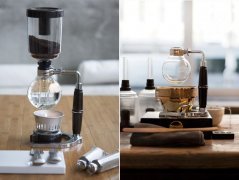
In 1840, a glass test tube in a laboratory triggered the invention of siphon coffee (Syphon). The British took the test tube used in Biya's chemical experiment as a model to create the first vacuum coffee pot. Two years later, Mrs. Bachang of France improved the kettle with a little spring in shape, and the familiar upper and lower convection siphon pot was born. Siphon coffee maker in France

The history and usage of siphon pot
In 1840, a glass test tube in a laboratory triggered the invention of the siphon coffee maker (Syphon). The British took the test tube used in Biya's chemical experiment as a model to create the first vacuum coffee pot. Two years later, Mrs. Bachang of France improved the kettle with a little spring in shape, and the familiar upper and lower convection siphon pot was born. Siphon coffee pot in France
Siphon pot basic siphon pot history and use method
In 1840, a glass test tube in the laboratory triggered the invention of the siphon coffee pot (Syphon), and the British took Biya as a prototype for chemical experiments to create the first vacuum coffee pot. Two years later, Mrs. Baxiang of France improved the pot with a little spring shape, and the familiar upper and lower convection siphon pot was born. Siphon coffee pot in France

History and usage of siphon pot siphon coffee
In 1840, a glass test tube in a laboratory triggered the invention of the siphon coffee maker (Syphon). The British took the test tube used in Biya's chemical experiment as a model to create the first vacuum coffee pot. Two years later, Mrs. Bachang of France improved the kettle with a little spring in shape, and the familiar upper and lower convection siphon pot was born. Siphon coffee pot in France
The history and usage of fine coffee siphon pot
In 1840, a glass test tube in a laboratory triggered the invention of siphon coffee (Syphon). The British took the test tube used in Biya's chemical experiment as a model to create the first vacuum coffee pot. Two years later, Mrs. Bachang of France improved the kettle with a little spring in shape, and the familiar upper and lower convection siphon pot was born. Siphon coffee maker in France
The History and usage of Coffee knowledge siphon Pot
In 1840, a glass test tube in a laboratory triggered the invention of siphon coffee (Syphon). The British took the test tube used in Biya's chemical experiment as a model to create the first vacuum coffee pot. Two years later, Mrs. Bachang of France improved the kettle with a little spring in shape, and the familiar upper and lower convection siphon pot was born. Siphon coffee maker in France
Introduction to the history and usage of siphon kettle
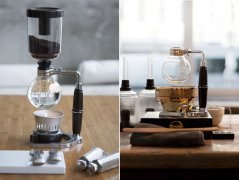
In 1840, a glass test tube in a laboratory triggered the invention of siphon coffee (Syphon). The British took the test tube used in Biya's chemical experiment as a model to create the first vacuum coffee pot. Two years later, Mrs. Bachang of France improved the kettle with a little spring in shape, and the familiar upper and lower convection siphon pot was born. Siphon coffee maker in France
A complete knowledge of siphon pot
The working principle of the siphon pot How does it work: the main principle of Syphon is to use the ideal gas equation: PV=nRT, under a fixed volume, heat the boiling water to make the steam pressure of the boiling water, press the boiling water into the upper layer to brew the coffee through the glass tube, and then cool the lower layer in a similar vacuum state to absorb the brewed coffee from the upper layer, and filter the dregs with a filter in the middle. You can take it while looking at it.
Common sense of Chinese Coffee growth Environment and brewing of small Coffee
Small grain coffee scientific name: Coffea arabica family genus: Rubiaceae coffee genus morphological characteristics: small trees or large shrubs, plant height 5 meters 8 meters. Base usually much branched, old branches gray-white. Nodes inflated, young branches glabrous. Leaves thinly leathery-ovate-lanceolate or lanceolate, apex long acuminate, base cuneate or slightly obtuse, entire or shallowly wavy, both surfaces glabrous. Cymes several clustered in leaf axils

General knowledge of fine coffee the growing environment of small-grain coffee
Small grain coffee scientific name: Coffea arabica family genus: Rubiaceae coffee genus morphological characteristics: small trees or large shrubs, plant height 5 meters 8 meters. Base usually much branched, old branches gray-white. Nodes inflated, young branches glabrous. Leaves thinly leathery-ovate-lanceolate or lanceolate, apex long acuminate, base cuneate or slightly obtuse, entire or shallowly wavy, both surfaces glabrous. Cymes several clustered in leaf axils

Characteristics of siphon pot brewing coffee principle and skills of siphon pot brewing coffee
Professional coffee knowledge exchange more coffee bean information please follow the coffee workshop (Wechat official account cafe_style) siphon pot: how does the siphon pot of applied scientific principles work? When the water is heated in the lower seat of the siphon pot, the gas will begin to flow out, and the vacuum in the lower seat will cause the water to move to the upper seat. And when the fire in the lower seat goes out, the air at the bottom
The History and usage of Fine Coffee basic knowledge siphon Pot
In 1840, a glass test tube in a laboratory triggered the invention of siphon coffee (Syphon). The British took the test tube used in Biya's chemical experiment as a model to create the first vacuum coffee pot. Two years later, Mrs. Bachang of France improved the kettle with a little spring in shape, and the familiar upper and lower convection siphon pot was born. Siphon coffee maker in France

Common sense of Coffee beans in Yunnan growth Environment and brewing of small Coffee
Small grain coffee scientific name: Coffea arabica family genus: Rubiaceae coffee genus morphological characteristics: small trees or large shrubs, plant height 5 meters 8 meters. Base usually much branched, old branches gray-white. Nodes inflated, young branches glabrous. Leaves thinly leathery-ovate-lanceolate or lanceolate, apex long acuminate, base cuneate or slightly obtuse, entire or shallowly wavy, both surfaces glabrous. Cymes several clustered in leaf axils

Siphon pot coffee brewing process temperature control method
Siphon pot is used to experience the process of coffee brewing, not only has a certain ornamental, the most important, siphon pot is the most convenient to master the process of equipment, brewing coffee in the taste of the complex degree (Note 1) performance can reach the ideal level, is the taste of coffee must use equipment. Brewed coffee is all right, all by the brewer's own preferences. But the siphon pot is an open device,
The History and usage of siphon Pot General knowledge of Coffee Pot
In 1840, a glass test tube in a laboratory triggered the invention of siphon coffee (Syphon). The British took the test tube used in Biya's chemical experiment as a model to create the first vacuum coffee pot. Two years later, Mrs. Bachang of France improved the kettle with a little spring in shape, and the familiar upper and lower convection siphon pot was born. Siphon coffee maker in France

A detailed explanation of the history and usage of the siphon kettle
In 1840, a glass test tube in a laboratory triggered the invention of siphon coffee (Syphon). The British took the test tube used in Biya's chemical experiment as a model to create the first vacuum coffee pot. Two years later, Mrs. Bachang of France improved the kettle with a little spring in shape, and the familiar upper and lower convection siphon pot was born. Siphon coffee maker in France